Vendor Lock-In Risk in Custody Technology Stacks



Somewhere between $60 billion and $70 billion sits idle in pre-funded institutional crypto accounts. The cause is structural: purchasing power is bound to wherever the assets physically sit, so a firm running $100 million strands $60 to $70 million of it at zero return. With tokenized Treasuries yielding 4 to 5 percent, the carry on that is not a rounding error. It is the clearest published measure of what address-binding costs, and the custody-vendor version runs one layer down, almost never quantified.
Why This Is Not Software Lock-In
In enterprise software the data survives the move: export, reintegrate, and the same records sit in a different system.
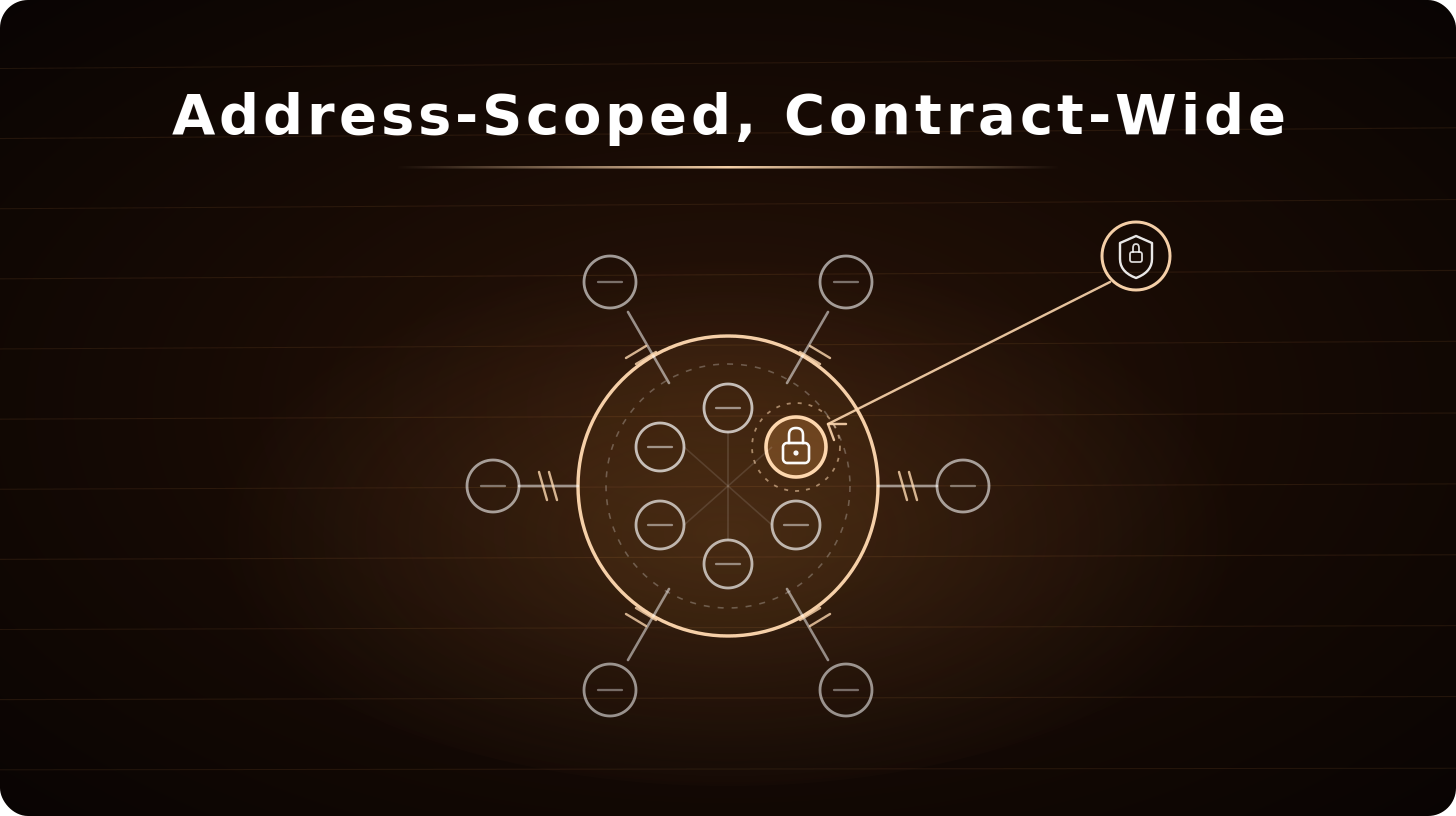
Custody has no equivalent, because the asset is the key. A platform whose key material could be exported to a competitor would be advertising a security defect, and threshold schemes are built so that no party, the client included, can reconstruct and carry away the signing capability. The vendor's strongest security guarantee and the client's exit option are the same mechanism pointed in opposite directions.
So there is no migration, only re-origination: generate fresh keys at the new provider, move every position on-chain to new addresses, then rebuild every relationship that pointed at the old ones. Most risk registers price that as a data export.
The Address-Binding Tax
Work out what actually points at a custody address and the bill assembles itself. Exchange and prime-broker whitelists, standing payment instructions held by counterparties, staking delegations, and administrator and auditor records keyed to those addresses. Each has its own owner, change process and lead time, measured in weeks.
The on-chain cost is the visible part and the smaller one. The real expense is re-pointing across dozens of external parties on a schedule you do not control, and until it completes you run two address sets at once, which is when misdirected payments happen.
You also discover the exit price at the moment you most need to exit. Vendor distress, a security incident, an acquisition, a repricing: the event that makes you want to leave is often the same one that makes an orderly departure hardest. That is a risk, not a cost.
What Cannot Move at All
Some positions are not expensive to move. They are immovable on any timeline that matters.
Staked positions carry unbonding periods that run from days to weeks and cannot be accelerated. Vesting contracts often hardcode a beneficiary address, so the position cannot be redirected without the issuer deploying a change. Tokenized securities require the transfer agent to re-register the holder, which is a legal process rather than a transaction. Permissioned tokens require the issuer to allowlist the new address before any transfer will succeed, and issuer response times are not contractual.
The indicator nobody computes is simple: what share of the book is address-bound rather than freely transferable? That percentage is the honest statement of lock-in exposure, and it appears on no custodian report because the custodian has no reason to produce it.
The counterparty leg, by contrast, is now measurable. Agio Ratings scored fourteen institutional custodians on twelve-month probability of default in the first quarter of 2026: Fidelity Digital Assets 0.39 percent, Anchorage Digital and BitGo 0.46 percent, Coinbase Prime 0.49 percent, NYDIG 0.50 percent, every provider under half a percent holding a banking charter, against 1.48 percent offshore. Those are investment-grade numbers. Lock-in risk is not default risk, and a strong credit profile does not make the door swing both ways.
Defenses That Hold and Defenses That Do Not
An exit clause is not a defense. A contractual right to leave does nothing about the on-chain and re-pointing cost of leaving, and a notice period is only useful if the work can finish inside it.
A second vendor holding two percent of assets under custody is a reference, not redundancy: a relationship that has never settled at size will not absorb the primary at speed. Escrowed key shares never exercised are the same thing, since an untested recovery path is an assumption rather than a control.
Four things hold. Retain at least one key share under hardware you own, so the threshold can be reconstituted without the incumbent's cooperation. Rehearse by moving a real tranche annually and recording how long each external re-pointing took, which is the only credible input to the exposure estimate. Measure and cap the address-bound share of the book as a standing limit. And push counterparties toward paying identifiers you control rather than vendor-issued addresses, which is the structural fix and the problem account abstraction exists to solve.
Residual risk remains after all four. The provider holds something that cannot be copied out, and no contract changes that. The goal is bounding the exposure, not eliminating it.
What a 10x Would Require
The binding constraint is key-share portability, and the industry is standardizing the wrong layer. API standardization gets the attention, but an API is not what traps the position. A threshold share generated under one provider's scheme is meaningless to another: different curves, different protocols, different ceremony assumptions. Until a common share format with interoperable ceremonies exists, every custody relationship is a one-way door.
That ceiling is commercial rather than technical. Allocators cap exposure to any single provider at the amount they could afford to strand, so aggregate assets under custody are bounded by that cap rather than by demand, which is also why competition on price has not arrived. BitGo filed to go public on January 12, 2026 at up to a $1.96 billion valuation, and the segment remains concentrated among a handful of chartered names.
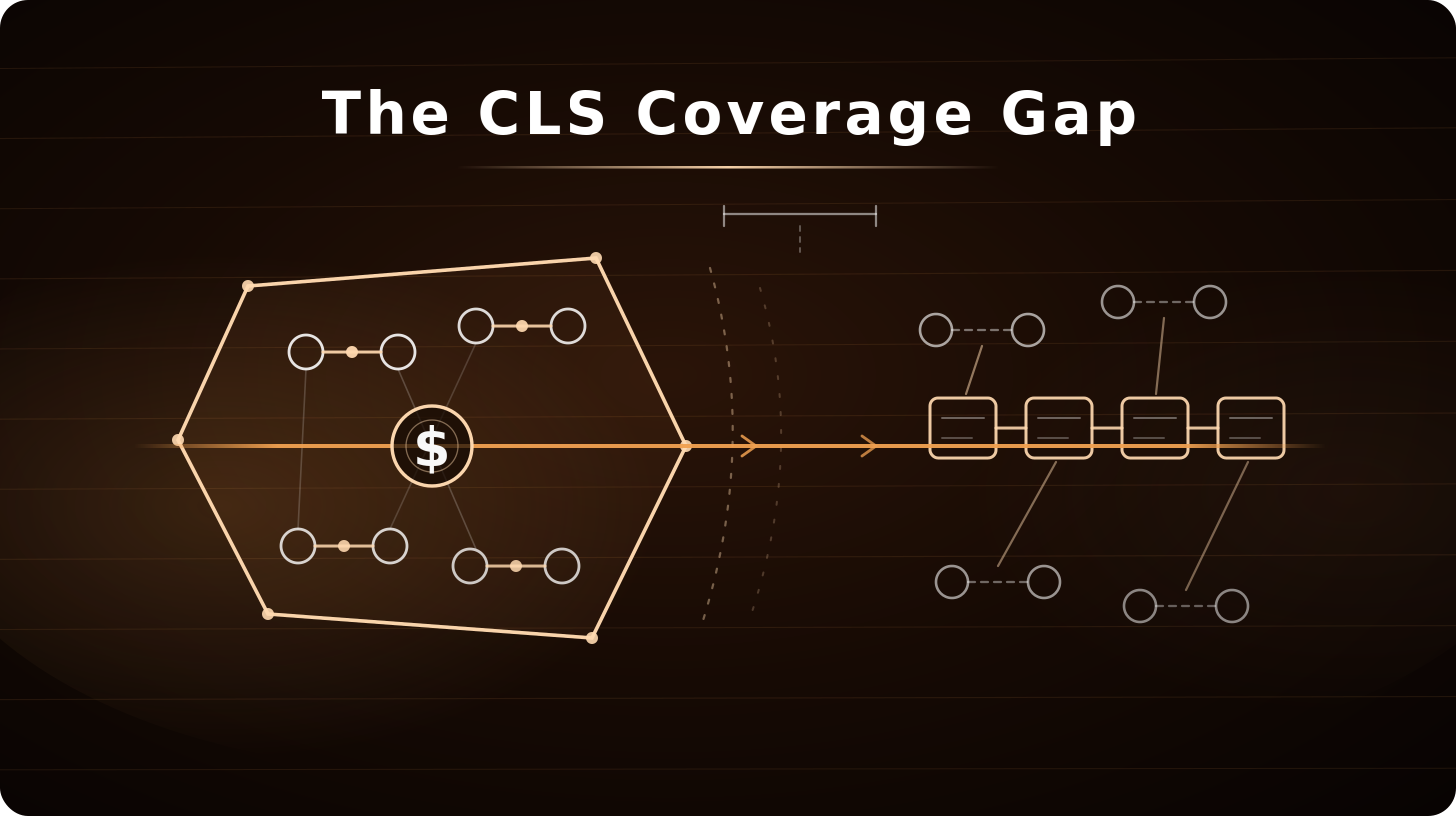
One layer of this has already been broken. Off-exchange settlement now lets collateral stay in custody while its purchasing power projects across venues in under 100 milliseconds, decoupling the trading relationship from asset location. That is proof the binding is a design choice rather than a law of nature. The same decoupling one layer down, between the institution and its custody technology, is what a tenfold market requires.
For informational purposes only. Not an offer to buy or sell any security. Available only to accredited investors who meet regulatory requirements.