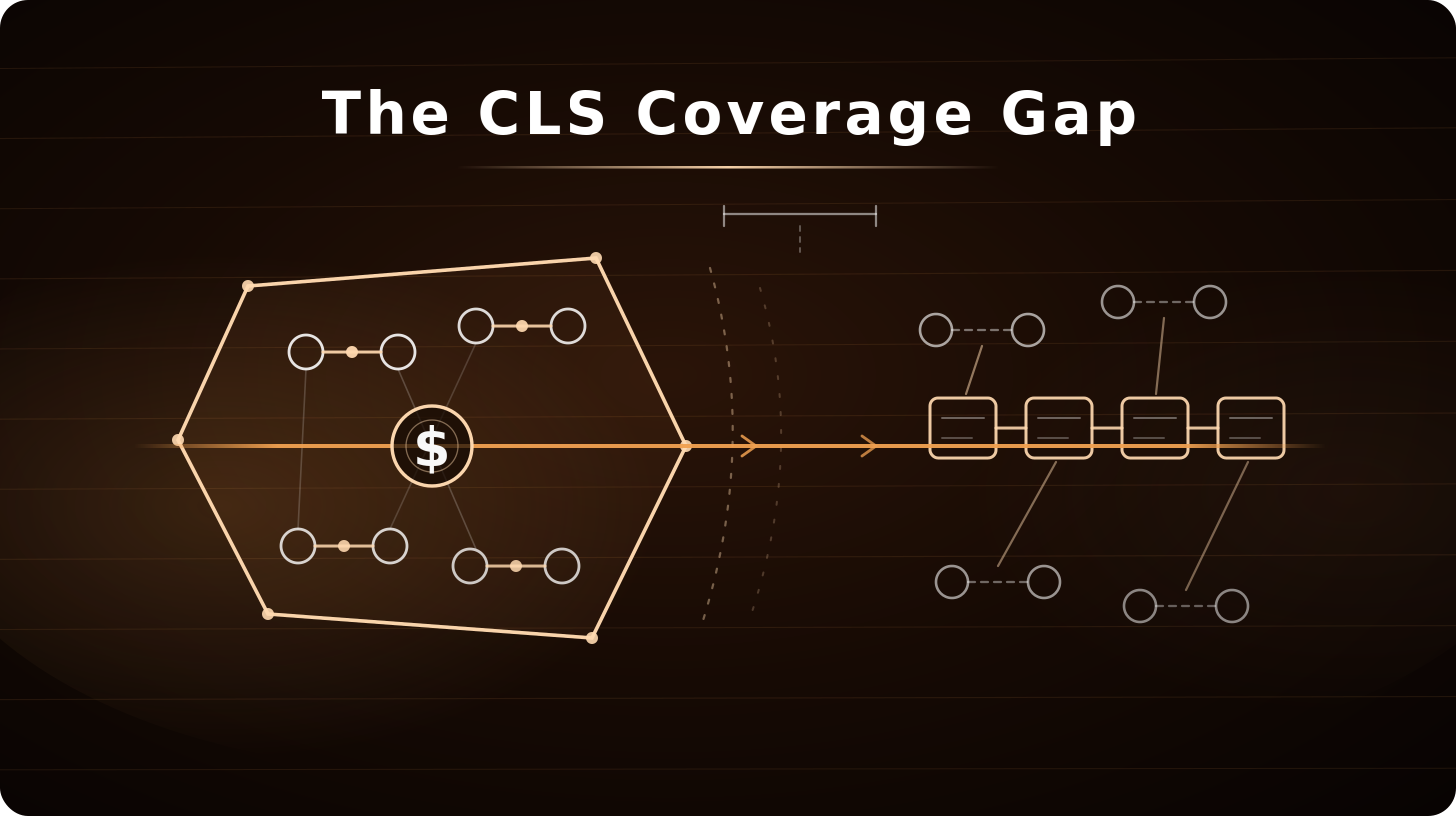
Intercompany Settlement Netting on a Permissioned Ledger



Kinexys expanded blockchain deposit accounts to five Asia-Pacific currencies on June 29, 2026, taking coverage to eight including euro, sterling and dollar, with onchain FX across those pairs. Cumulative volume passed $4 trillion and average daily transactions exceeded $7 billion, up from $3 trillion and $5 billion two months earlier. JERA Global Markets uses yen accounts for intragroup treasury flows. Siemens has run intercompany payments between global subsidiaries on the platform since 2021 and added near-instant dollar to euro onchain FX in October 2025. The vendor benefit is stated as 24/7 availability across time zones. Real, but not the benefit a controller should care most about.
The Legacy Netting Cycle
Subsidiaries submit intercompany invoices, which are matched against each other on predefined rules. An in-house bank or netting center calculates each entity's net position, collapsing many bilateral obligations into one settlement per entity per currency. Approval workflows then check transfer pricing, tax policy and authorization limits before the net is finalized and paid.
One net payment per entity replaces dozens of bilateral wires, and one centrally managed conversion replaces many small FX trades. Most groups run this monthly, because the cycle is set by policy and close calendars rather than by any settlement constraint.
What the Ledger Changes Is the Derivation, Not the Speed
A net is one cash movement standing in for many obligations, but almost nothing downstream of the payment wants the net. Consolidation wants bilateral gross by entity pair, transfer pricing wants per-transaction pricing, withholding is per payment and per jurisdiction. The net is the only thing the bank statement proves, and it is the one figure the accounting does not use.
So the cycle has a seam running through its audit trail. The bank statement evidences the net. A netting center spreadsheet asserts the gross. Someone reconciles the two by hand every period, and the quality of that tie-out is the quality of the evidence.
A permissioned ledger closes that seam, and this is the part worth paying for. If every bilateral obligation is recorded individually and the netting calculation is a deterministic function over those records, the gross and the net become one artifact rather than two documents joined by a reconciliation. The derivation becomes replayable: an auditor can recompute the net from the recorded obligations and get the same number that moved. Settlement speed is almost beside the point, because a monthly cycle was never waiting on settlement.
The Evidence Consolidation Actually Needs
Elimination entries need gross bilateral balances by entity pair, in transaction currency, tied to the period. Transfer pricing documentation needs each charge mapped to its intercompany agreement with the pricing basis recorded at the time of the charge, not reconstructed later. Withholding needs to know which underlying obligation carried the liability, which a net settlement obscures entirely if tax character was not bound at submission.
That last point is the one that bites, and it is a design decision rather than an accounting afterthought. Tax character, agreement reference and pricing basis are off-ledger metadata and have to be attached at submission, because after the run executes there is no way to attribute one net cash movement back to a tax treatment nobody recorded.
The legal basis needs documenting too. A multilateral net is a set-off or a novation, so it requires a netting agreement among the participants and, in several jurisdictions, regulatory permission. Exchange-control regimes can treat netting as a capital movement, so a ledger that technically can net across an entity does not establish that it lawfully may.
Where It Breaks and the Controls That Hold
Disputed invoices are the first failure, and a dispute framework is the usual gap. On a ledger the consequence is sharper: a disputed item must be excluded before the run executes, because a settled net cannot be unwound. The dispute cutoff stops being a soft deadline and becomes a hard control with a named owner.
Second, the FX rate source. A netted conversion needs one documented rate source, timestamped against the run, or transfer pricing has no defensible rate. Pin it in the run record, not in a policy document.
Third, entity identity drift. A subsidiary's identifier changes during a reorganization and obligations post against an orphaned identity. The control is a mapping from ledger identifier to the legal entity register, under change control, reviewed before each run.
Fourth, and counterintuitively, 24/7 settlement makes period boundaries worse. An obligation settled at 23:50 in one jurisdiction can fall in the next period for another. Continuous availability removes the value-date scramble and introduces a cutoff question the old banking day answered for free. Fix the accounting cutoff in ledger time and document the convention.
Costs, and What Is Improving
The savings are in transaction count and FX, not in speed. Fewer wires, fewer conversions, one managed rate instead of many retail ones. The implementation cost is mostly data discipline, because binding agreement references and tax character to every obligation at submission is a process change in each subsidiary's accounts payable, not a treasury project.
This is not disintermediation. The platform is a bank, the asset is a deposit token, and the $4 trillion ran through bank infrastructure on a permissioned ledger. Banks did not concede this ground; one built the rail and kept the balance sheet. For a group treasury that is a feature, since the settlement asset is a deposit claim on a regulated institution rather than an issuer obligation.
The signal to track is currency coverage, because netting economics scale with how many of a group's functional currencies sit on one ledger. Three to eight in a year is what decides whether this is a two-region optimization or a group-wide one. The controller's test is simpler: ask whether the netting run can be recomputed from its own records. If the answer is yes, the close got shorter and the audit got cheaper, which is a better reason to do this than settlement finality on a Saturday.
For informational purposes only. Not an offer to buy or sell any security. Available only to accredited investors who meet regulatory requirements.