
Data Provenance for AI Training: Hashes, Attestations, Incentives


A digital provenance analysis published in early April 2026 reported that deepfake files surged from approximately 500,000 in 2023 to over 8 million in 2025 — a 900 percent annual increase. The C2PA standard now spans 6,000+ member organizations and is natively integrated into Samsung Galaxy S25, Google Pixel 10, LinkedIn, TikTok, and Adobe Creative Cloud. For an allocator evaluating the AI-agents-need-rails thesis, the question is whether on-chain data provenance — cryptographic hashes, attestations, and tokenized contribution incentives — becomes the institutional standard for AI training data, or remains a niche infrastructure category. The early evidence is that the stack is already being built in production.
The Falsifiable Claim
Within 24 months, regulated AI deployment in finance, healthcare, and government will require verifiable training data provenance — not just disclosure documents. If by April 2028, regulated AI systems still rely primarily on signed PDF documentation rather than cryptographic attestations and on-chain anchoring, the thesis is wrong. The constraint forcing this shift is not idealism. It is that synthetic content, copyright litigation, and the EU AI Act's traceability requirements have made undocumented training data a liability that disclosure forms alone cannot cure.
What Must Be True
Two conditions must hold. First, the regulatory and legal direction must continue to demand evidence rather than assertion. The EU AI Act, adopted in 2024, elevated documentation expectations for AI systems and their data sources. Similar governance is emerging across the US and Asia. AI-IP litigation increasingly turns on what data was used and how it was licensed, and signed PDFs do not survive cross-examination when the underlying files have been modified.
Second, the on-chain primitive must be cheaper and more interoperable than alternatives. Storing the entire training corpus on-chain is impossible — datasets are measured in petabytes. The viable architecture stores artifacts off-chain and writes cryptographic commitments on-chain to prove integrity and timing. Dataset hashes, license attestations, and contribution records anchor on a ledger auditable across organizations without a shared central authority. The cost of writing a hash is cents. The cost of being unable to prove what your model trained on is measured in lawsuits.
The On-Chain Primitive and the AI Capability
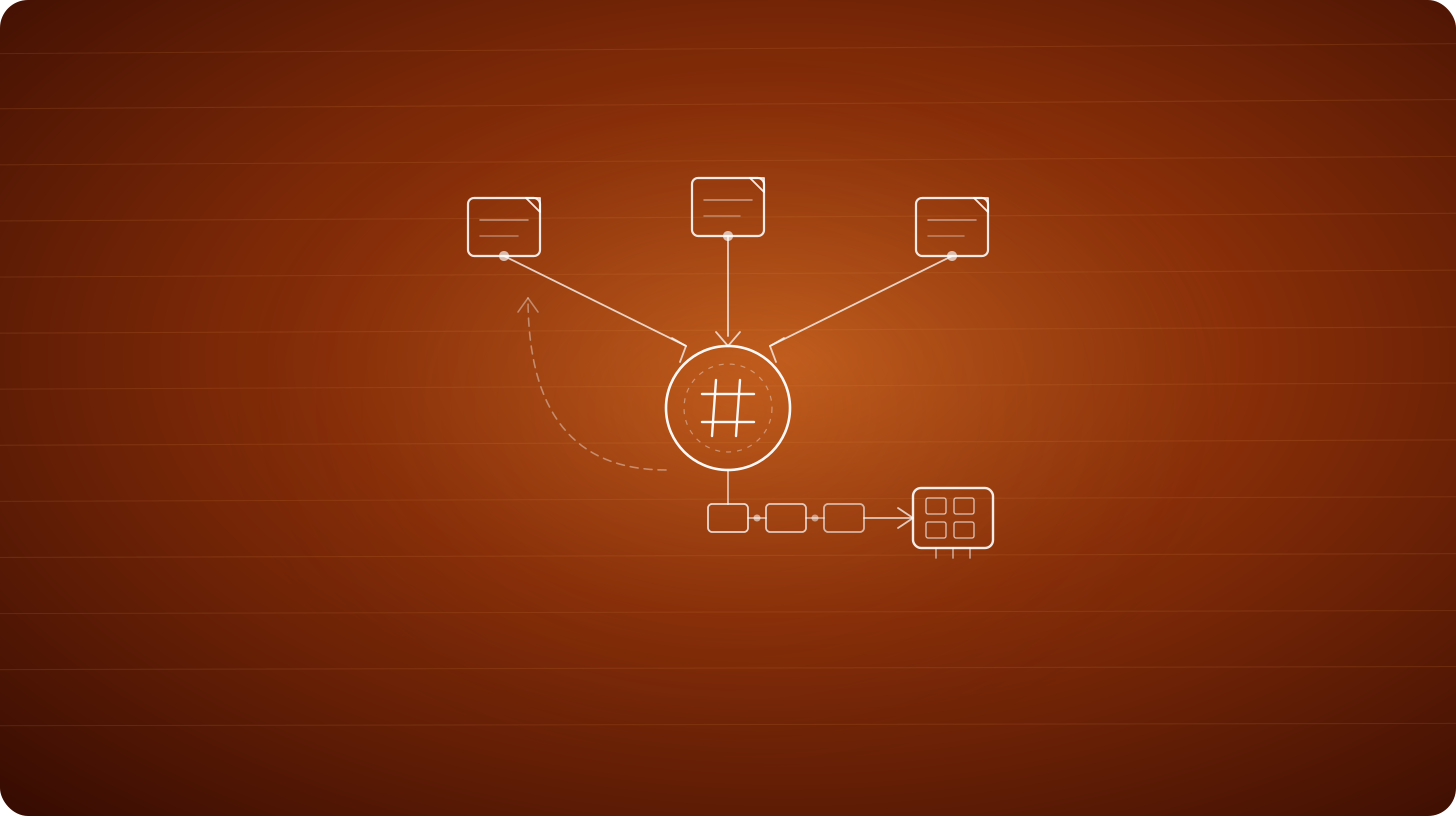
The enabling primitive is a three-layer stack. At the base, dataset fingerprinting: cryptographic hashes of training data versions, signed by the contributor or curator and timestamped on a public ledger. In the middle, attestation logs: records of preprocessing steps, license verification, PII screening, bias testing, and consent validation, each anchored on-chain at the time of execution. At the top, contribution incentives: tokenized representations of dataset rights — Vana's VRC-20 standard introduced in 2025 is one example — that route royalties to contributors when their data is used in training.
The enabling AI capability is automated provenance verification. AI agents can check whether a dataset hash matches a previously signed version, whether the attestation chain is intact, and whether license terms permit a specific use. The same agents flag missing attestations or broken signatures at training time, not after deployment.
A Real Example
Vana operates as an EVM-compatible Layer 1 specifically designed to host DataDAOs — decentralized pools where users contribute data and receive token rewards when it is used to train AI models. As of early 2026, Vana hosts over 12 million data points across 16 active DataDAOs. The Reddit Data DAO (r/datadao) alone aggregated over 140,000 Reddit users contributing comment history. The VRC-20 token standard introduced in 2025 ties dataset-backed tokens to actual data utility through fixed supply, governance, and liquidity rules. C2PA, while not on-chain itself, has shipped a Conformance Program and is being extended through the Creator Assertions Working Group to cover AI training data disclosure assertions specifically. Google integrated C2PA Content Credentials into Search and Ads in 2026, and OpenAI committed to attaching Content Credentials to Sora video generations.
What Would Falsify This and What to Watch
Three developments would invalidate the thesis. First, if regulators retreat from substantive traceability requirements and accept signed disclosure documents as sufficient. Second, if metadata stripping at the platform layer — Instagram, X, and WhatsApp still strip C2PA metadata on upload — fails to be solved at scale, making provenance records useless once content is shared. Third, if a centralized provenance registry operated by hyperscalers becomes the de facto standard, displacing on-chain anchoring.
The monthly trackable progress signal is twofold. First, the ratio of AI model releases that publish C2PA training data disclosure assertions or equivalent on-chain attestations to total releases. Today the ratio is small. The thesis is that it crosses 50 percent for regulated-industry deployments by mid-2027. Second, the dollar volume of training data settled through tokenized standards like VRC-20 or comparable contribution-incentive primitives. As that grows, the financial layer is forming around verifiable data, not speculation. As it stagnates, the thesis weakens.
For a CPA evaluating the audit trail, the required evidence is direct: dataset hash anchored on-chain at a verifiable timestamp, attestation chain for preprocessing and license verification, and contribution records that match the model card. Three artifacts. All three or none — partial provenance is the same as no provenance.
For informational purposes only. Not an offer to buy or sell any security. Available only to accredited investors who meet regulatory requirements.