RFQ Systems vs Streaming Quotes in Institutional Crypto



The stablecoin market sat at 315.3 billion dollars as of June 5, 2026, with USDT and USDC alone near 262.8 billion — and at that scale, an automated market maker cannot absorb a 50 million dollar USDC-for-USDT rebalance without measurable slippage. That single fact is why institutional crypto execution is converging on a request-for-quote pattern that looks more like Bloomberg FXGO than Uniswap. B2C2 alone confirmed 1.7 trillion dollars in 2025 notional volume across its OTC and electronic desks; Cumberland, Wintermute, FalconX, and Galaxy Digital all now run electronic RFQ APIs covering the major stablecoins. For a technical PM, the design question is which quote model to route to — RFQ or streaming — and the answer turns on the primitives and the trust assumptions underneath each.
The Two Primitives
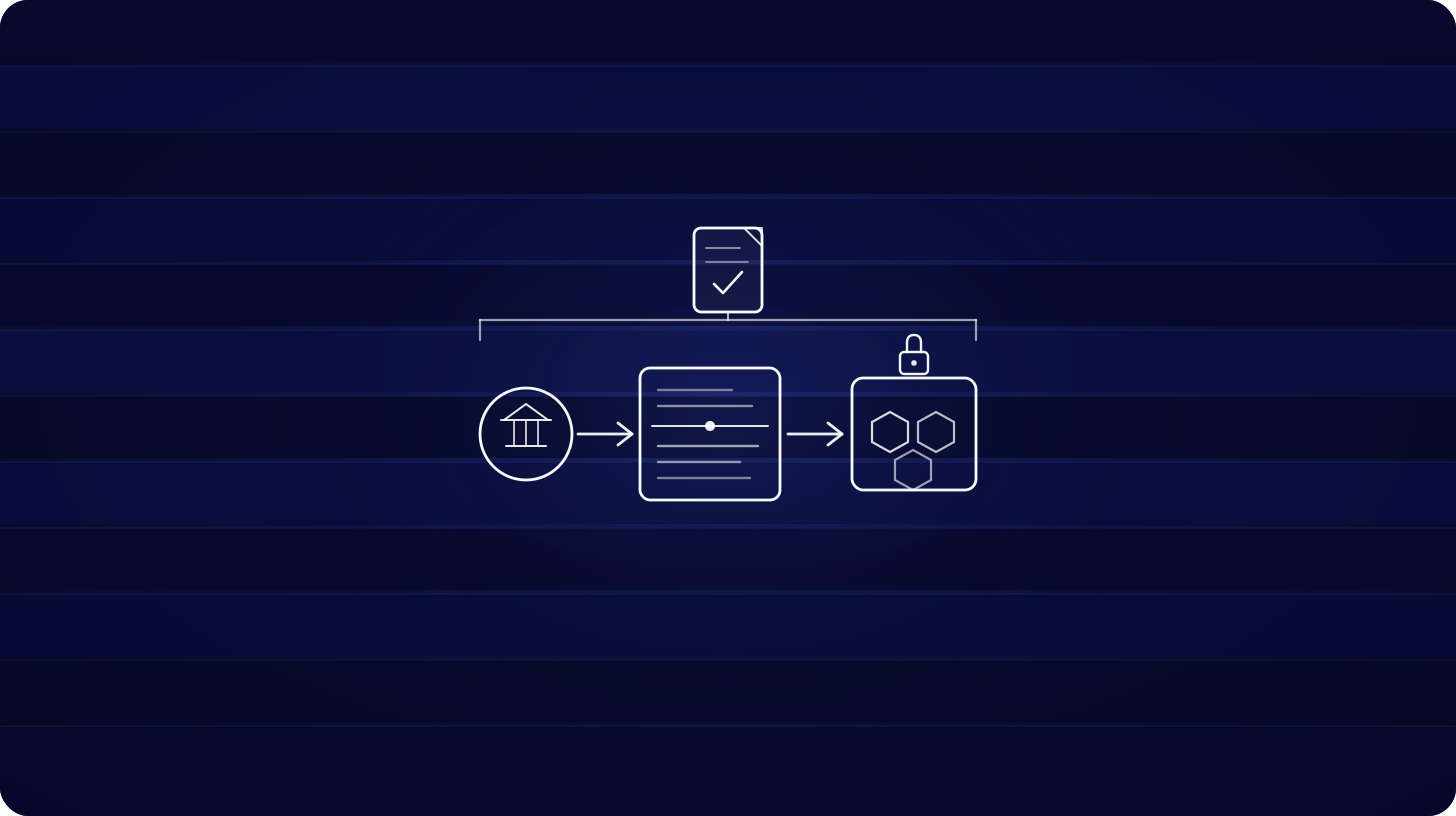
A streaming-quote model publishes continuous two-sided prices a taker can hit at any moment: the central limit order book pattern, extended by market makers who push executable prices into an aggregator. Trust sits in the venue's matching engine and the continuous availability of displayed liquidity; the taker sees depth and hits it. An RFQ model inverts the flow. The taker submits a request — asset, size, sometimes settlement terms — to one or more liquidity providers, who return firm, time-limited quotes, and the taker executes against the best one on a fill-or-kill basis. The market never sees the intent; only the solicited providers do. Trust moves to the counterparties committing risk capital (B2C2, Cumberland, Wintermute, FalconX, Galaxy) and to the platform mediating the quote-and-execution chain. The core architectural difference: streaming prices the market continuously and publicly, while RFQ prices a specific trade privately on demand — and that difference determines who sees your intent before you fill.
The on-chain variants make the primitive concrete. 0x pioneered off-chain signed quotes settled on-chain; Hashflow runs gasless intent-based RFQ with signed market-maker quotes; UniswapX auctions a trader's intent to competing fillers. Each abstracts the same pattern — private quote, firm price, on-chain settlement — onto public rails, and each carries a settlement trust assumption the streaming book does not.
Who Bears Which Risk
The risk allocation differs sharply. In streaming, the taker bears market-impact risk: a large order walks the book and moves the price against itself, broadcasting intent to everyone watching. In RFQ, the liquidity provider bears inventory risk — it commits capital at a firm price and must hedge — while the taker bears counterparty and settlement risk on the provider and the platform. The quote-lifespan mechanic concentrates this: an RFQ quote is valid for seconds and executes fill-or-kill, so a stale quote that fills at an outdated price is a direct loss, and latency between request and displayed quotes (measured in milliseconds for a strong engine) is itself a risk surface. Streaming's equivalent failure is a fast market where displayed depth evaporates before the taker's order lands. The honest framing: RFQ trades market-impact risk for counterparty-and-settlement risk, which is exactly the trade an institution moving size wants to make.
Operational Failure Points and Controls
Four failure points define the plumbing. Stale quotes: an execution against an expired price, the reason quote-validity windows must be enforced precisely. Liquidity-provider concentration: an RFQ network with few genuine responders produces wide spreads dressed up as multi-dealer competition, so verifying real provider breadth beyond BTC and ETH is a first-order control. Settlement fragmentation: the quote is only half the trade — an institution needs settlement unified across chains and custodians, which is why orchestrators now sit in front of the providers to route the quote and settle anywhere. And information leakage: even in RFQ, requesting from too many providers signals intent to the market makers who did not win, so provider-list discipline matters. The institutional controls mirror these: precise quote-validity enforcement, audited provider breadth, best-execution logging of the full quote-and-execution chain, and integration into the OMS so allocation and reporting flow downstream automatically.
Where Costs Live and What Improves
Costs live in the spread the provider charges for inventory risk, the platform or orchestrator fee, the settlement cost across rails, and the implicit cost of information leakage. Against those, RFQ's benefit is measurable best execution: a treasurer can document that a 50 million dollar conversion was quoted against multiple firm prices and filled at the best — the same evidentiary standard corporate treasuries already meet in FX and fixed income. For this plumbing to support 10x institutional adoption, three things must improve: genuine multi-dealer breadth so quote competition is real rather than nominal; settlement unification so the quote and the on-chain leg are one auditable workflow rather than two reconciliations; and standardized best-execution reporting that a compliance function accepts without bespoke work. The constructive signal is that the pattern is maturing toward its traditional-finance analog rather than inventing a worse one — RFQ for large negotiated size, streaming for continuous small flow, orchestrators unifying settlement, and the full quote chain logged for audit. The institution does not choose one model; it routes each trade to the primitive whose trust assumptions match the trade, which is exactly how mature markets have always worked.
For informational purposes only. Not an offer to buy or sell any security. Available only to accredited investors who meet regulatory requirements.