
Rehypothecation On-Chain: Tracing Hidden Leverage Chains

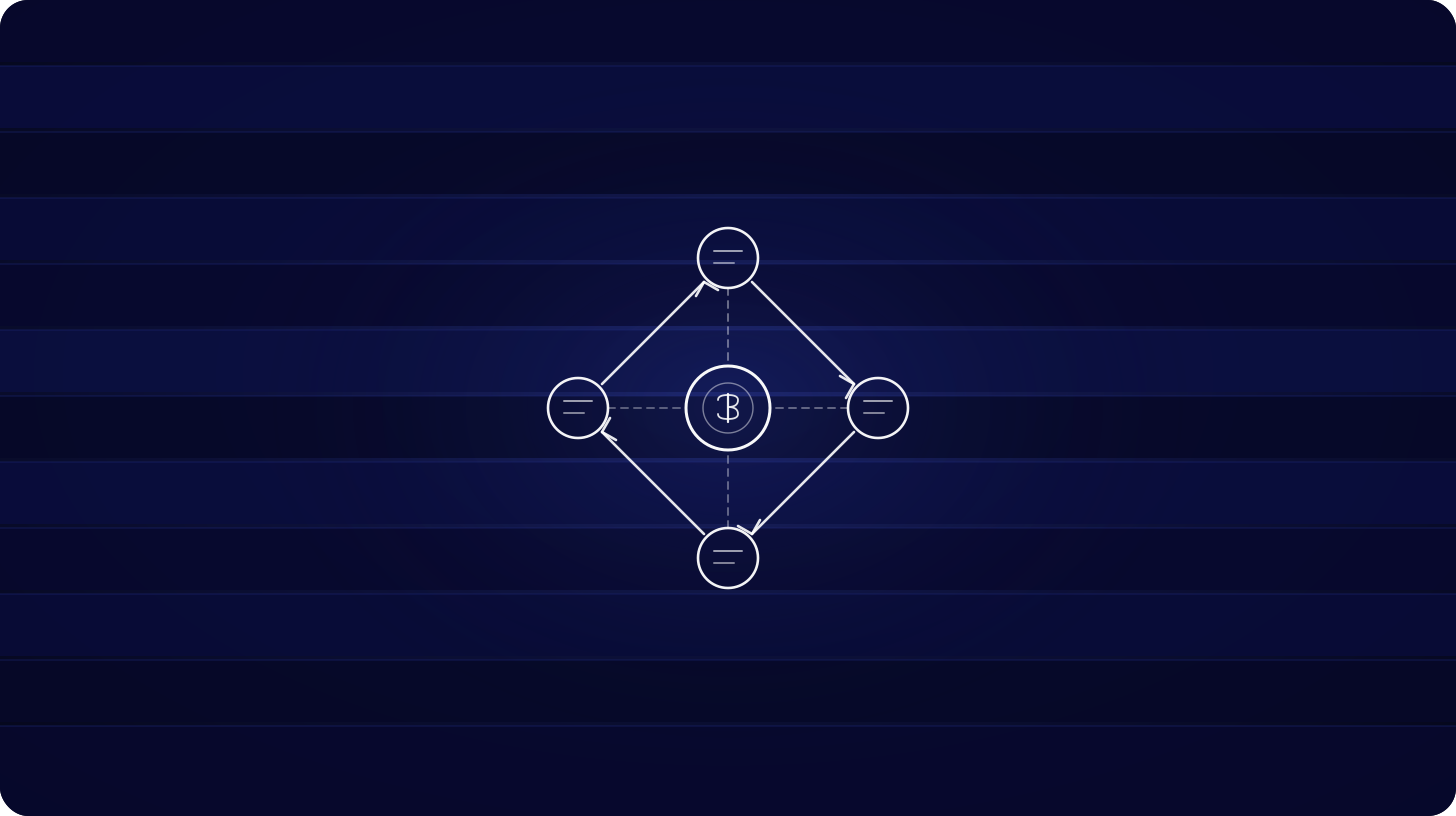

A recursive loop at an 80 percent loan-to-value ratio produces effective leverage of one divided by one minus LTV — five times the original capital — and recent academic work on decentralized credit describes these structures plainly as shadow collateral chains, analogous to repo-style maturity transformation in traditional banking. Sophisticated borrowers routinely operate above that, particularly where collateral is treated as near risk-free by hard-coded oracles. The compliance problem is not that this is hidden in the conventional sense. Every transaction is public. The problem is that nobody signs a rehypothecation agreement on-chain: the chain assembles itself through composability, and reconstructing it requires traversing protocols nobody aggregates. Full transparency at the transaction level, near-zero visibility at the aggregate level, is the failure this post is about.
The Trigger and the Mechanics
In traditional finance, rehypothecation is contractual — a broker reuses client collateral under terms that are documented, disclosed, and capped by regulation. On-chain, the equivalent exposure is emergent. A depositor supplies an asset, borrows against it, converts the borrowing back into the same or a correlated asset, and re-deposits — the practice called looping or folding. Common variants include the classic collateral loop, the liquid staking loop, the stablecoin yield loop, the liquid restaking loop, and the meta-vault version where an aggregator routes capital across other curators and protocols. Each cycle is a legitimate, arms-length transaction; nothing is concealed and no agreement is breached. But the aggregate creates what a 2022 study of debt-financed collateral identified as the core issue: the practice decreases the transparency of funding sources, because it becomes unclear whether collateral is genuinely owned by the depositor or is itself debt owed to another protocol. That study found debt-financed collateral prevalent across the ecosystem, particularly with stablecoin collateral, producing interconnectedness where an operational shutdown or deposit run at one protocol propagates quickly to others.
Where the Losses Land
The exposure concentrates on the parties who believe they are senior. Lenders into looped markets hold claims against collateral that is itself borrowed, so their effective seniority is worse than the loan-to-value implies. Passive vault depositors inherit whatever leverage the curator's strategy embeds, and meta-vaults that reallocate across other vaults create recursive exposure and dependency loops a depositor cannot see from the product page. And every participant in a market where an aggressive oracle treats a liquid staking token as equivalent to the underlying is holding depeg risk that has been shifted onto lenders by parameter choice rather than by contract — a risk allocation nobody negotiated.
What Breaks First and How to Detect It
The first break is the loop whose collateral carries the most aggressive oracle, not the loop with the highest nominal leverage. Where a hard-coded oracle prices a liquid staking or restaking token at parity with its underlying, a genuine discount in the secondary market does not register as a decline in collateral value until the design is changed or the peg gap becomes undeniable — so positions that look healthy on the health factor are already impaired in economic terms, and the correction arrives as a cascade rather than a drift. The second break is the funding-rate spike: loops depend on the spread between earned yield and variable borrow cost, and utilization-driven borrow rates can invert that spread quickly, forcing unwinds that consume the same liquidity every other looped position needs.Detection is a tracing exercise, and it is possible even though nobody publishes it. Estimate effective leverage per market from the LTV ceiling, since one over one minus LTV gives the structural maximum. Examine the oracle configuration for every collateral asset, because a hard-coded or heavily smoothed price is the clearest signal that depeg risk has been moved onto lenders. Look at health-factor distributions rather than averages, since the risk sits in the tail. Ask what share of a protocol's stated deposits is debt-financed rather than owned — the question TVL was never designed to answer. And for any vault, establish what the strategy may do with collateral: whether it can loop, whether it can allocate into other vaults, and how deep that nesting goes.
Defenses, the Playbook, and Residual Risk
Real defenses are structural. Prefer market-priced oracles over hard-coded parity for any yield-bearing collateral. Cap allowable nesting depth in vault mandates and require the mandate in writing before allocating. Size positions against the tail of the health-factor distribution in markets you lend into, not the median. And apply the plainest diligence rule available: if you cannot trace where the yield comes from, assume it comes from the next depositor. Fake defenses are more common — treating TVL as a solvency measure, treating on-chain transparency as equivalent to visibility, and treating a stablecoin-versus-stablecoin loop as low-risk because price risk is minimal, when the leverage multiplies every other risk in the stack by the same factor.
The residual risk is that composability is the feature producing the exposure. Permissionless protocols cannot prevent their tokens being used as collateral elsewhere, so no single protocol can cap system-wide reuse, and the chain will always be assembled by parties who never coordinate. What has genuinely improved is the analytical layer: effective leverage now has a published formula, debt-financed collateral has been measured rather than asserted, oracle design is recognized as a first-order risk-allocation decision rather than a technical detail, and institutional risk curation has begun documenting what each vault strategy may do with collateral. The leverage chain is still emergent — but it is now legible to anyone willing to trace it, and legibility is what turns an unknowable systemic risk into an underwritable one.
For informational purposes only. Not an offer to buy or sell any security. Available only to accredited investors who meet regulatory requirements.