Programmable Compliance: Encoding Policy in On-Chain Controls



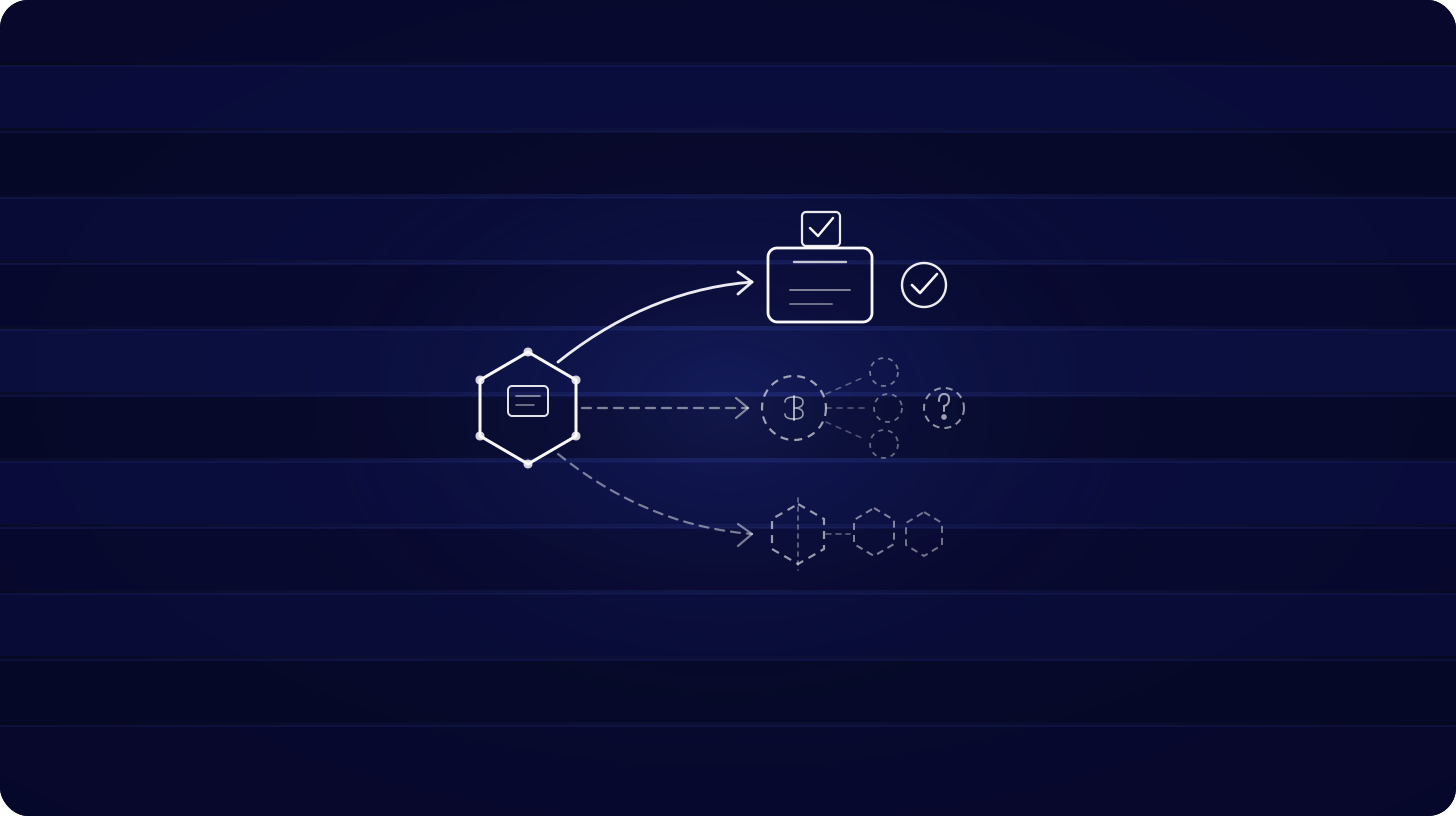
On February 5, Chainlink published a technical framework for what it calls programmable policy enforcement: the practice of embedding compliance rules directly into smart contracts so that transactions cannot execute unless specific regulatory conditions are met. The framework is not theoretical. It describes production-ready infrastructure where a tokenized bond can automatically reject a transfer from a wallet that has not passed KYC verification, or a corporate treasury can require three digital signatures before releasing funds above a set threshold. For allocators evaluating blockchain infrastructure, this concept represents a structural shift in how compliance works, moving from retroactive audit to pre-trade enforcement.
What Must Be True for This to Matter
The thesis that AI agents and autonomous systems will eventually operate on-chain at scale depends on a prerequisite that rarely gets discussed: those agents need enforceable boundaries that do not require human intervention at the point of execution. A trading bot that autonomously manages collateral positions, or an AI agent that moves funds between protocols, cannot pause to wait for a compliance officer to approve each transaction. The rules must already be encoded in the infrastructure.
This is the core argument for programmable compliance. If the next wave of on-chain activity involves automated systems acting on behalf of institutions, the compliance layer must be deterministic: built into contract logic rather than applied after settlement. A fund manager cannot tell auditors that compliance was enforced by hoping an AI agent followed its instructions.
The Constraint Today
The current constraint is that most compliance in digital asset markets is still applied after the fact. Platforms perform KYC during onboarding but rely on post-trade monitoring to catch violations during the asset's lifecycle. The token itself carries no embedded rules about who can hold it or under what conditions it can move. As settlement compresses toward T+0, the window for human review between execution and finality shrinks to seconds, making pre-trade verification essential.
The On-Chain Primitive
The enabling technology is transfer-restriction logic encoded at the token contract level. Standards like ERC-1400 and ERC-3643 on Ethereum allow issuers to define rules that execute automatically when a transfer is attempted, checking whether the receiving wallet holds a valid identity credential, whether jurisdictional restrictions apply, and whether accreditation status is current.
Chainlink's Automated Compliance Engine layers on top of these standards by connecting on-chain contracts to off-chain data sources. A smart contract can query an identity verification provider or a sanctions list through an oracle and receive a cryptographic attestation that the counterparty is cleared, all within the same transaction. The policy definition stays with the compliance officer. The enforcement is automated.
DTCC's tokenization pilot, set to launch in H2 2026, requires that each approved blockchain supports compliance-aware tokenization, meaning tokens can only transfer to registered wallets that have passed OFAC screening. This is not an optional feature of the pilot. It is an architectural requirement. Similarly, WisdomTree's recently approved T-instant money market fund operates on Ethereum with transfer restrictions that limit participation to verified investors.
What Would Falsify This Thesis Element
Two developments would undermine the programmable compliance thesis within the next 12 months. First, if major regulators explicitly reject embedded compliance as insufficient and insist on traditional intermediary-based enforcement for tokenized securities, the demand for on-chain policy infrastructure would stall. Second, if privacy regulations like GDPR prove incompatible with on-chain identity attestations, requiring that no identity-related data, even cryptographic proofs, touch a public blockchain, the technical architecture would need fundamental rethinking.
Neither scenario is the current trajectory. The SEC's no-action letter for DTCC effectively endorsed a model where compliance controls are built into the token infrastructure. The EU's MiCA regulation establishes a compatible licensing framework. And privacy-preserving approaches using zero-knowledge proofs allow compliance verification without exposing personal data on-chain.
What to Watch Monthly
For an allocator tracking whether programmable compliance is progressing from concept to production, three metrics are observable. First, the number of tokenized securities issued under compliance-aware standards like ERC-3643, which indicates whether issuers are building compliance into token architecture from the start. Second, the total value locked in tokenized U.S. Treasuries, which now exceeds 10 billion dollars and reflects institutional comfort with on-chain compliance frameworks. Third, the number of DTC participants that register wallets for the DTCC tokenization pilot once it opens, which will signal whether major broker-dealers view on-chain compliance infrastructure as operationally viable.
The audit trail in this model is the transaction itself. Every transfer either met the encoded policy requirements and executed, or it did not and was rejected. For a CPA reviewing a tokenized portfolio, this is a fundamentally different evidence standard than reviewing trade blotters and exception reports after the fact. The compliance record is not a separate document. It is embedded in the blockchain's transaction history.
For informational purposes only. Not an offer to buy or sell any security. Available only to accredited investors who meet regulatory requirements.