
Clearing and Netting in DeFi: Who Is the Clearinghouse?

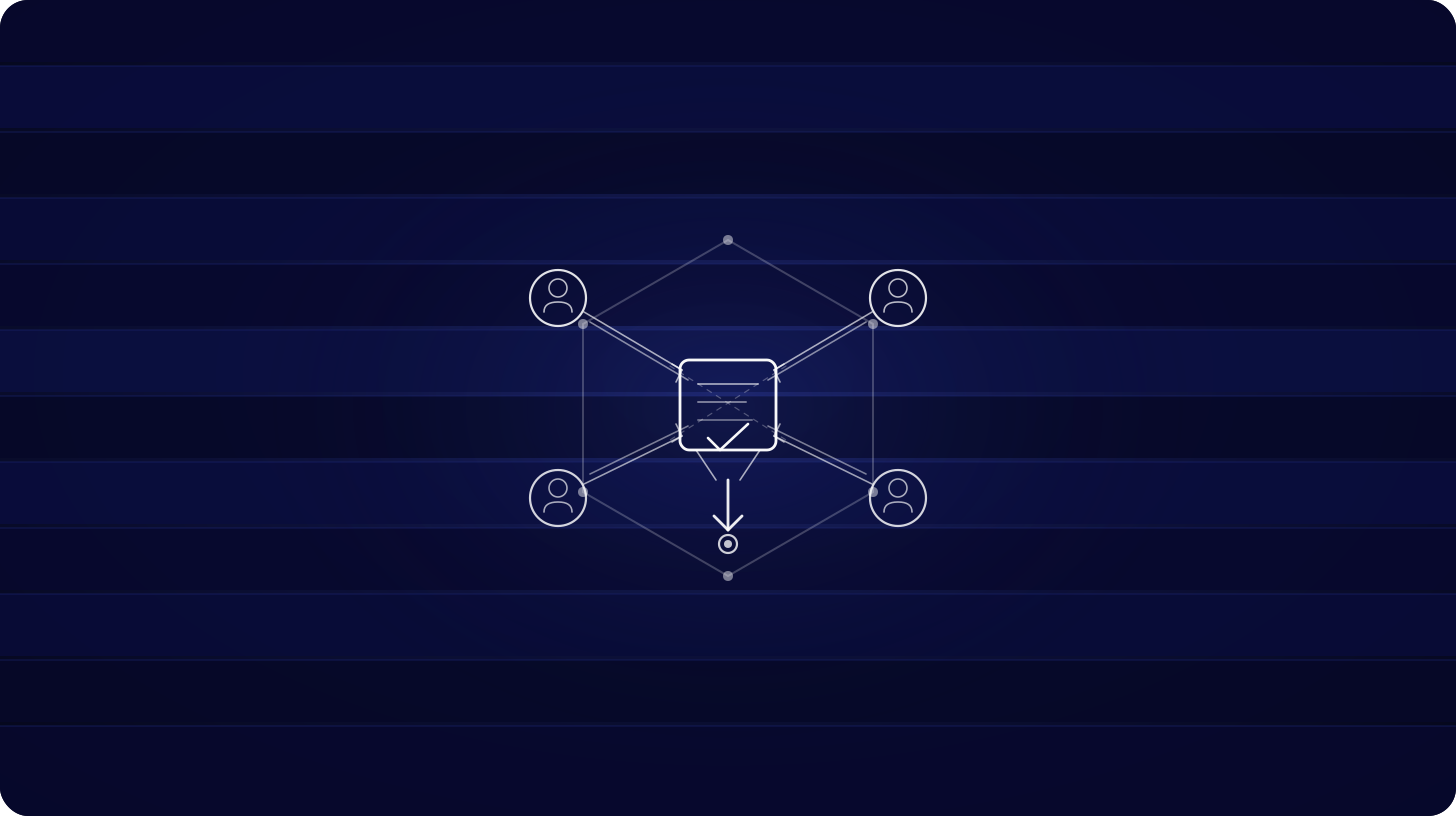

In January 2026, ICE announced that the New York Stock Exchange is building a tokenized securities platform with 24/7 operations, instant settlement, and stablecoin funding, with Bank of New York Mellon and Citi providing tokenized deposits for clearinghouse funding outside regular banking hours. The same month, the Congressional Research Service published an analysis noting that DeFi validator infrastructure plays a role analogous to traditional clearinghouse networks. For a CFO, these two developments frame the central question for this final post in the series: as traditional finance moves onto blockchain rails and DeFi matures toward institutional scale, who performs the clearing function — the role that prevents a single counterparty failure from cascading through the entire system?
What a Clearinghouse Does and Why It Matters
In traditional markets, the clearinghouse (DTCC, LCH, CME Clearing) interposes itself between every buyer and seller after a trade is matched — becoming the buyer to every seller and the seller to every buyer through novation. This serves three functions. First, counterparty risk absorption: if one party defaults, the clearinghouse covers the other side using its guarantee fund and margin deposits. Since multilateral clearing was introduced in 1925, clearinghouse-affiliated entities have covered all losses from counterparty failure. Second, netting: the clearinghouse reduces settlements by offsetting opposing positions. The DTCC nets over 98 percent of US equity trades daily. Third, standardization: uniform margin requirements, settlement timelines, and default procedures across all participants.
Who Performs These Functions in DeFi
In DeFi, no single entity performs all three functions. The smart contract performs novation for AMM swaps: when a user trades ETH for USDC on Uniswap, the pool contract simultaneously receives one asset and delivers the other. There is no separate counterparty to default because the liquidity pool is the counterparty. The trade executes atomically or reverts entirely.
Netting is largely absent. Each on-chain transaction settles individually at the gross level. Ten swaps on Uniswap in a day means ten separate transactions with ten gas costs. Batch auction protocols like CoW Swap introduce a form of netting by finding coincidences of wants within a batch, but this remains a minority of DEX volume.
The guarantee fund function maps partially to protocol safety modules. Aave's Safety Module holds approximately 487 million dollars in staked AAVE tokens that can be slashed to cover bad debt. But the coverage is not comparable to a traditional clearinghouse guarantee fund, which is sized relative to cleared volume and backed by mandatory contributions from all clearing members. Aave's module is funded by voluntary stakers incentivized by token rewards.
Where the Ops Team Gets Paged
Three operational gaps result from the distributed clearing model. First, cross-chain settlement is not atomic. Within a single chain, DeFi achieves atomic settlement superior to traditional T+1. Across chains, atomicity breaks down. A bridge transfer that fails on the destination chain after succeeding on the source creates a settlement mismatch with no clearinghouse to resolve it — DeFi's version of the Herstatt risk that led to CLS Bank for foreign exchange in 2002.
Second, there is no default waterfall beyond the protocol level. In traditional clearing, the waterfall runs: defaulting member's margin, guarantee fund contribution, clearinghouse capital, surviving members' contributions. In DeFi: borrower collateral, liquidation discount, safety module if one exists. If all three are exhausted, the loss is socialized across pool lenders or governance votes on the shortfall.
Third, no regulatory mandate requires DeFi protocols to maintain clearing-grade capital reserves. Traditional clearinghouses are designated as systemically important financial market utilities. DeFi protocols operate under smart contract logic and community governance with no prudential supervisor enforcing capital adequacy.
What Is Improving and Why This Series Ends Here
The constructive signals are structural. NYSE's tokenized securities platform will bring clearinghouse-grade infrastructure onto blockchain rails, with BNY and Citi providing tokenized deposits for margin funding. Aave V4, expected in 2026, introduces a unified liquidity layer designed to reduce contagion risk. The Financial Stability Board has noted that DeFi's automated liquidation mechanisms represent a form of clearing that operates faster than human-intermediated systems. Dutch auction liquidation models, now adopted by Morpho Blue, are more capital-efficient than fixed-discount mechanisms.
This series began 52 posts ago with the premise that digital asset infrastructure can be explained through the lens of the traditional financial plumbing it is replacing or augmenting. The clearing question is the right place to end because it is the question traditional finance professionals ask first — who stands behind the trade? In DeFi, the smart contract, the liquidity pool, the oracle, the safety module, and the liquidation engine collectively perform the clearing function. No single entity guarantees every trade. The guarantee is architectural rather than institutional. Whether that architecture is sufficient for institutional scale is the question the next phase of adoption will answer.
For informational purposes only. Not an offer to buy or sell any security. Available only to accredited investors who meet regulatory requirements.