
How a Billion-Dollar Asset Manager Integrated Stablecoin Treasury Operations

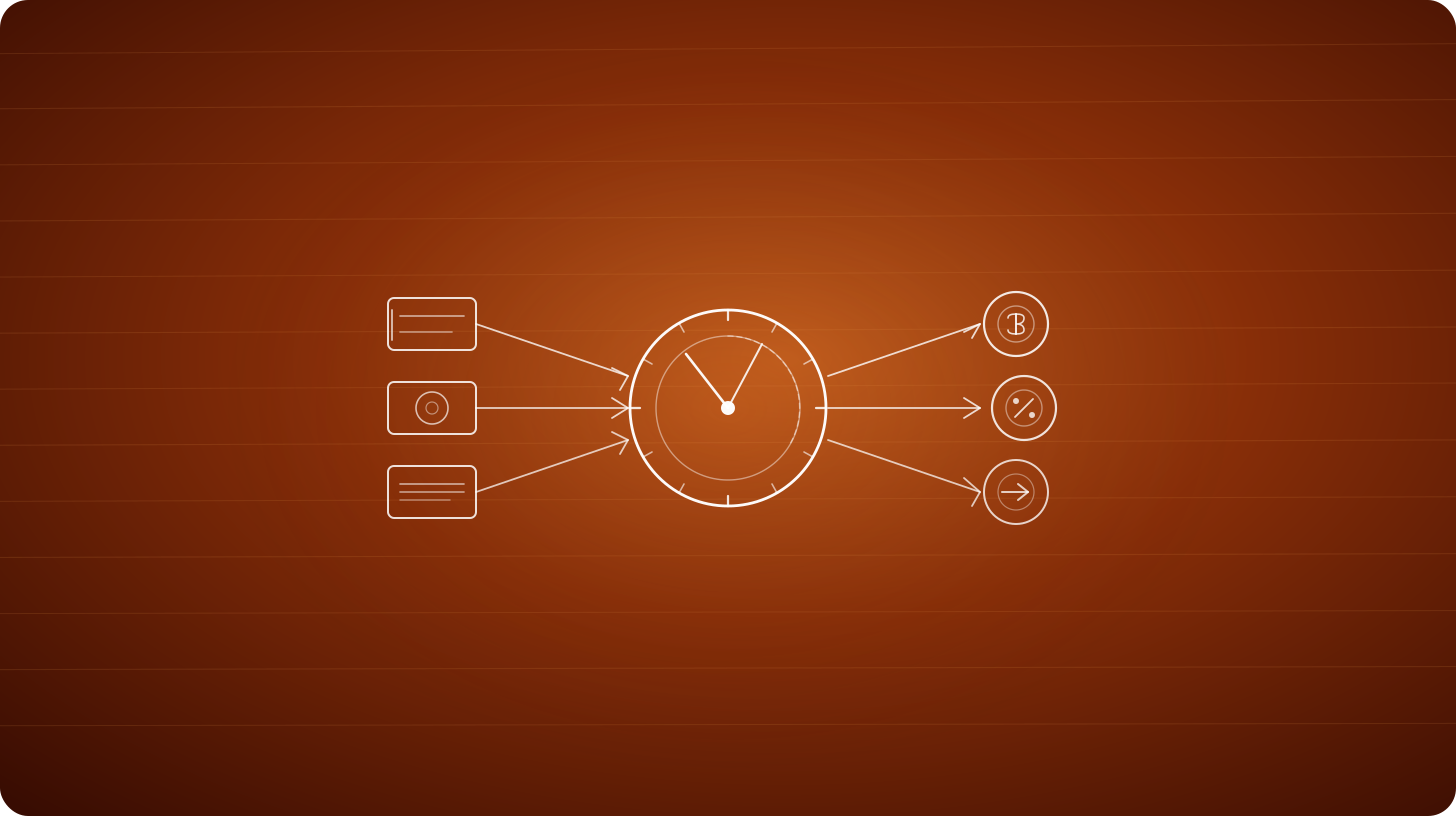

At Stripe Sessions 2026 two weeks ago, Stripe announced that US Treasury users will soon access funds 24/7 via stablecoin rails, and that Stripe Atlas founders anywhere in the world will incorporate into US dollar-backed Treasury accounts with stablecoin storage from day one. Bridge, Stripe's stablecoin orchestration acquisition, already powers Dakota — a digital asset management firm operating in over 100 countries — handling issuance, reserves, and redemptions for sophisticated treasury management. The same pattern works for traditional asset managers. For a CFO at a billion-dollar firm, the question is not whether to integrate stablecoin treasury operations but what the workflow looks like in practice, what breaks, and what the audit trail produces.
The Legacy Workflow
A billion-dollar asset manager runs treasury across multiple bank accounts in multiple jurisdictions. The CFO maintains operating cash for payroll, vendor payments, fund administration fees, audit and legal expenses, and intercompany transfers between management entity, GP entity, and fund vehicles. Cross-border payments to overseas team members, sub-administrators, or co-investors run through wires with 1 to 3 business days settlement and $25-50 fees plus FX spread. Vendor settlements are batched weekly. Reconciliation between operating bank, fund administrator, and audit firm happens monthly. Operating cash above payroll buffer typically sits in sweep accounts earning 1 to 2 percent below Treasury bill yield.
The pain points: cross-border settlement lag (1-3 days), banking partner concentration (most asset managers run 1-2 banking relationships with exit risk on either), and yield drag on operating cash. None are catastrophic. All compound into measurable cost over a year.
The On-Chain Workflow
The integration runs in three layers. The first layer is a stablecoin financial account — Stripe Treasury, Bridge, BVNK, or Fipto — that holds USDC for operating cash. Funding is via fiat on-ramp from existing bank accounts. The account supports both stablecoin storage and fiat transactions in USD and EUR, with off-ramp to BRL, AUD, GBP, NGN, and similar currencies entering preview in 2026. The CFO designates which expenses settle on stablecoin rails: international vendor payments, cross-border team payroll, fund admin fees, and intercompany transfers between US-incorporated and offshore entities.
The second layer is yield. Operating cash above payroll buffer moves into BUIDL, BENJI, USYC, or a comparable tokenized money market fund — earning 4 to 4.5 percent on cash that previously earned 1 to 2 percent. For a $50M operating cash balance, the yield delta is $1-1.5M annually. Crucially, tokenized MMFs redeem in seconds to USDC then to fiat in minutes, so the liquidity profile matches a sweep account rather than a traditional MMF with T+1 redemption.
The third layer is accounting and audit integration. SAB 122 (effective for fiscal years after December 15, 2024) lets the firm treat custodied stablecoins like any other custodied asset, without on-balance-sheet liability recognition. Stripe Treasury exports USDC transaction history as CSV for accounting software that does not natively support USDC. The Fireblocks integration with Chainalysis and Elliptic provides automatic KYT screening on every inbound and outbound stablecoin transaction, generating the audit trail the fund administrator and auditor require.
Where the Plumbing Breaks
Three integration points routinely break. First, banking partner acceptance. The firm's primary bank evaluates the stablecoin operation under enhanced due diligence, with the risk that the bank decides crypto-related deposit flows exceed its risk appetite and the firm loses its banking relationship. Mitigation: maintain at least one banking partner with public crypto-friendly policies (US Bank, BNY Mellon, Customers Bank), and structure the stablecoin operation through a regulated orchestrator like Bridge or Stripe that handles conversion before deposit.
Second, accounting reconciliation. Most accounting software does not natively reconcile USDC. The CFO either uses an integrated solution (Bitwave, Cryptio) or builds a manual CSV import process. Reconciliation is straightforward for USDC at 1:1 USD because the peg holds, but it creates a tracking obligation that does not exist for fiat operations. Third, fiat off-ramp limits. Stablecoin off-ramps to local currency are subject to per-corridor limits, KYC verification, and Travel Rule reporting. A $10M wire to a German vendor splits across multiple off-ramp transactions or routes through a single licensed corridor depending on orchestrator.
What the Integration Produces
The audit trail is direct. Every stablecoin transaction is on-chain and timestamped, with the orchestrator's KYT screening evidence attached. The fund administrator receives a CSV export at the same cadence as fiat bank statements, with parallel reconciliation procedures. The auditor receives the same data plus the orchestrator's SOC 2 Type II report. For a CPA evaluating the audit trail, the evidence is more granular than a traditional bank statement: every transaction includes counterparty wallet, KYT risk score, on-chain timestamp, settlement chain, and gas cost. The reconciliation gap between operational visibility and quarterly disclosure shrinks because both layers share the same data feed.
The Stripe Sessions 2026 announcements are the constructive signal: 24/7 access, expanded off-ramp currencies, scheduled payouts, and Treasury integration with embedded wallets via Privy mean the operational lift to integrate stablecoin treasury is now lower than the lift to add a new traditional banking relationship. For a CFO building treasury operations from scratch in 2026, stablecoin rails are increasingly the default and traditional banking is the fiat on-ramp.
For informational purposes only. Not an offer to buy or sell any security. Available only to accredited investors who meet regulatory requirements.