
Trade Finance Letters of Credit On-Chain: An Importer's Workflow


The honest starting point for any importer evaluating an on-chain letter of credit is that the first generation failed. Contour, the bank-backed LC network formerly called Voltron, shut down in October 2023 citing insufficient funding; we.trade and Marco Polo also collapsed. Permissioned consortia built around bank governance never reached the critical mass to justify their operating costs. What survived is more useful and more modest: Xalts acquired Contour in 2024 and relaunched it around stablecoin settlement, and Komgo — which now connects over 300 corporates and institutions across 50 countries — evolved from a pure-blockchain LC platform into a document-workflow platform that integrates with stablecoin rails. The 2026 model is not one chain that does everything; it is a network of networks. For a CFO running imports, the workflow now decomposes into three independently adoptable layers — documents, compliance, and settlement — and the audit trail is the reason to adopt any of them.
The Legacy Workflow
A sight letter of credit today is a paper-and-SWIFT process governed by the ICC's UCP 600 rules. The importer applies to its bank, which issues the LC to the exporter's bank against a confirmed credit line; issuance typically takes three to five business days once terms are agreed. The exporter ships, then presents documents — the bill of lading, invoice, packing list, certificates — to its bank, which forwards them for examination. Document examination and payment for a sight LC generally occur within five banking days of presentation. The bill of lading is the load-bearing document: it is the title to the goods, and physically couriering the paper original from invoice to bank can take five to ten days on its own. Every hand-off is a manual document check, a reconciliation, and a discrepancy risk.
The On-Chain Workflow
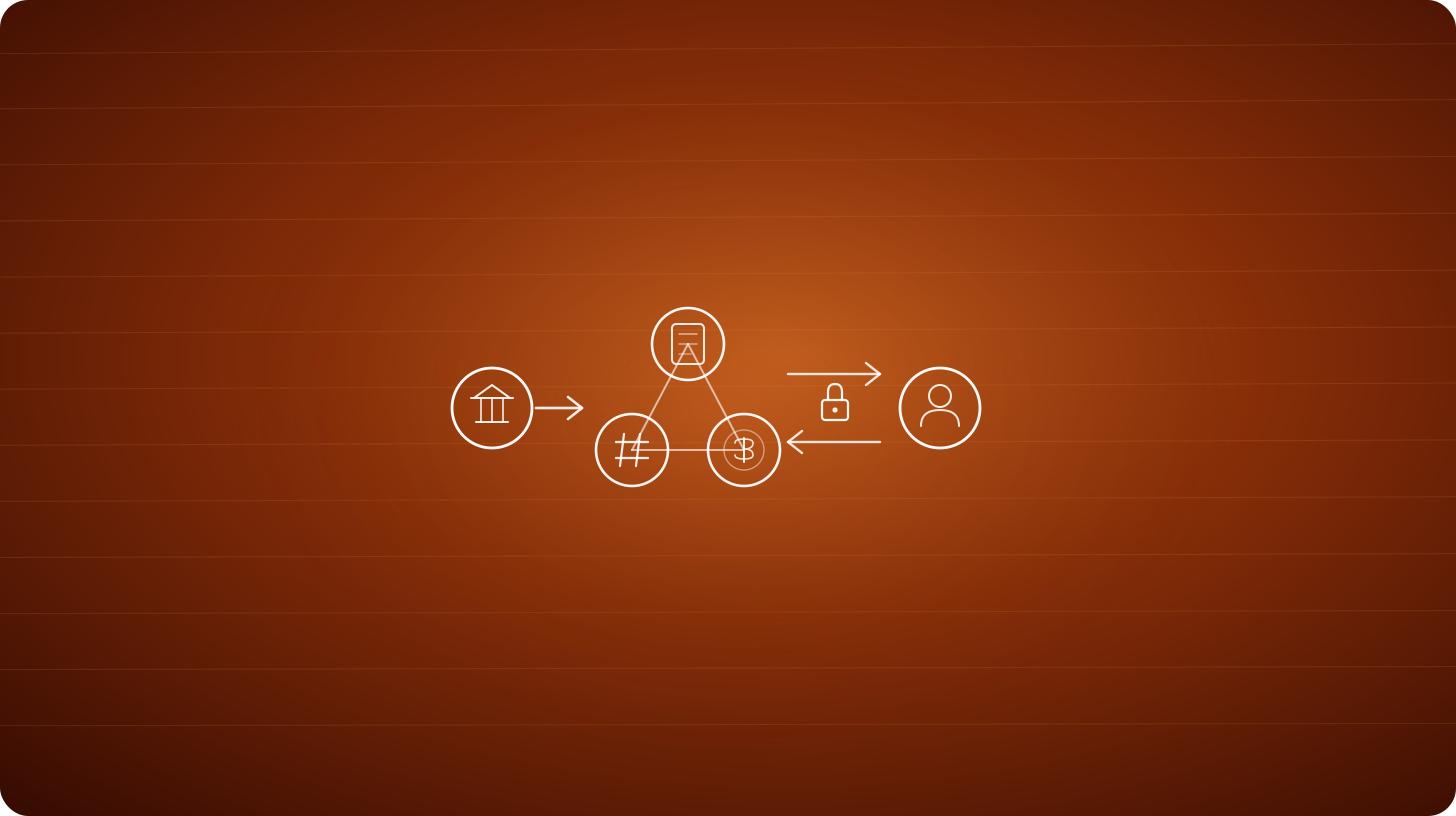
The digital version keeps the LC structure and replaces the paper mechanics layer by layer. Documents: the bill of lading becomes an electronic bill of lading (eBL) — a single authoritative digital original whose exclusive possession is legally equivalent to holding the paper, enforceable where the jurisdiction has adopted UNCITRAL's Model Law on Electronic Transferable Records (MLETR). Compliance: KYC, AML, and sanctions screening are embedded at the platform level, and a shared registry — the SWIFT-MonetaGo duplicate-financing check is the reference implementation — flags whether the same invoice or bill of lading has already been financed elsewhere, closing a fraud gap paper never could. Settlement: the payment leg moves to a regulated stablecoin or deposit token, so when the eBL transfers ownership the payment settles in the same atomic transaction — title and money move together or not at all, collapsing settlement from days to seconds. A smart contract can encode the LC's release condition: payment executes only when the eBL token is presented and, optionally, a shipping oracle confirms port arrival. The importer does not adopt one monolithic platform; it connects an eBL provider, a duplicate-financing registry, and a settlement rail, each replaceable independently.
Where the Plumbing Breaks
Three failure points define the workflow. First, legal enforceability by jurisdiction: MLETR is what makes an eBL legally the title rather than a picture of it, and adoption is uneven — a corridor where either the exporter's or importer's jurisdiction has not enacted MLETR-equivalent law leaves the eBL on uncertain footing, and overall eBL adoption remains below 6 percent of transactions. Second, the network-of-networks coordination cost: interoperability across the document, compliance, and settlement layers is the whole design, but a break between an eBL platform and the settlement rail reintroduces exactly the manual reconciliation the system was meant to remove. Third, counterparty and platform concentration: the first generation died of insufficient adoption, so an importer must weigh whether a given network will still exist in three years — the failures were commercial, not technical.
Costs, Timing, and the Audit Trail
The timing gain is the headline: an LC process measured in one to two weeks of document movement compresses toward hours, with the settlement leg itself dropping from days to seconds, and the direct cost target is the 2-to-4-percent correspondent-banking fee load that commodity traders and manufacturers — not crypto-native firms — are actually adopting this to escape. For a CPA, the audit trail is the strongest part of the case. The eBL is a single timestamped authoritative record, so the "which copy is original" problem that underlies most trade-document fraud disappears. The duplicate-financing registry provides positive evidence that the same collateral was not pledged twice. The atomic settlement record ties the payment to the exact document transfer that triggered it, so delivery-versus-payment is provable rather than asserted. And the smart-contract release condition is itself the control evidence: the payment could not have executed unless the encoded terms were met. Reconciliation of the trade — documents, compliance checks, and payment — collapses into a single linked chain of records rather than three separate files an auditor must tie together by hand. The constructive signal is that the industry learned the right lesson from the first generation's failure: instead of one consortium chain everyone must join, the surviving model lets an importer adopt the eBL layer, the fraud-check layer, and the settlement layer independently, prove each one to an auditor on its own, and replace any of them without rebuilding the others — which is how durable financial infrastructure actually gets built.
For informational purposes only. Not an offer to buy or sell any security. Available only to accredited investors who meet regulatory requirements.